Tax rules in this post are current as of October 13, 2026, and the sale prices are from September 2026. The prices are due for a review in January 2027 and the tax rules in October 2027.
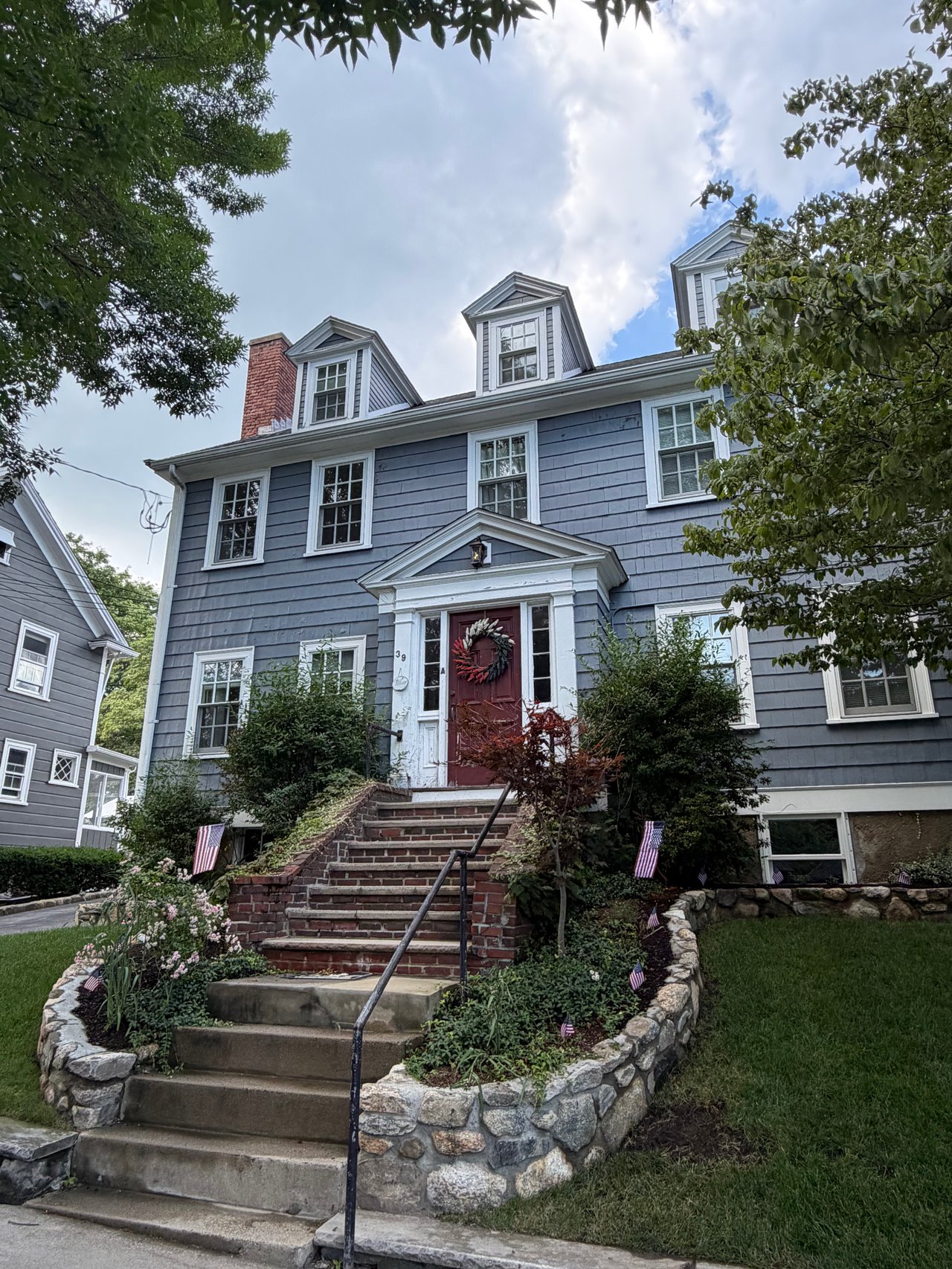
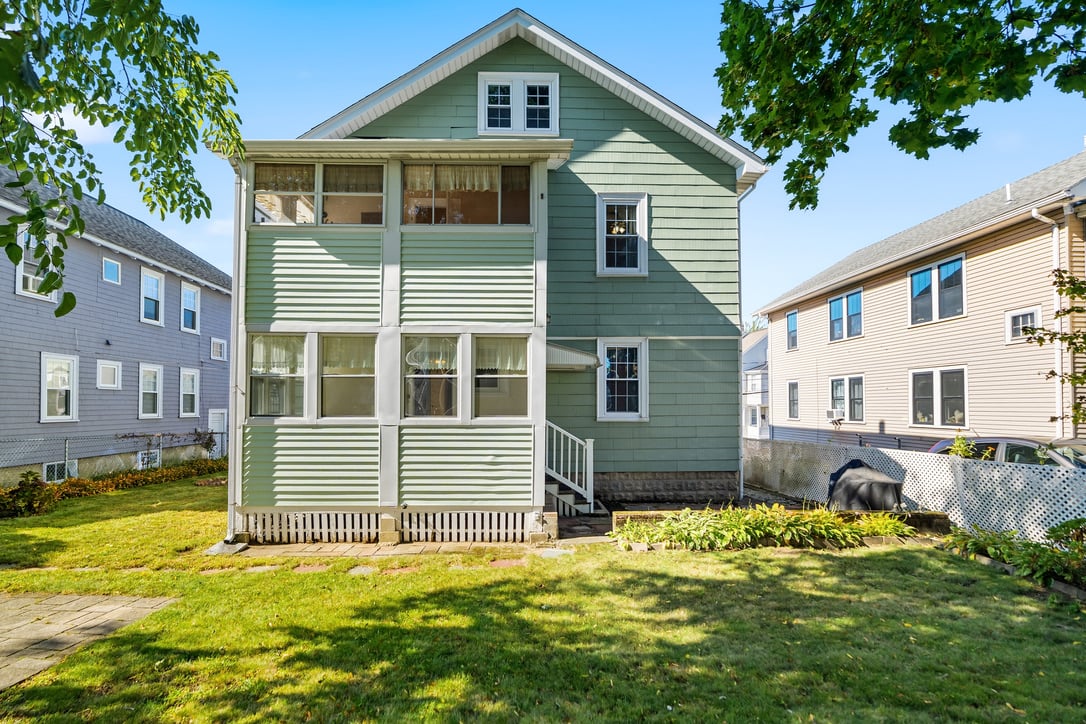
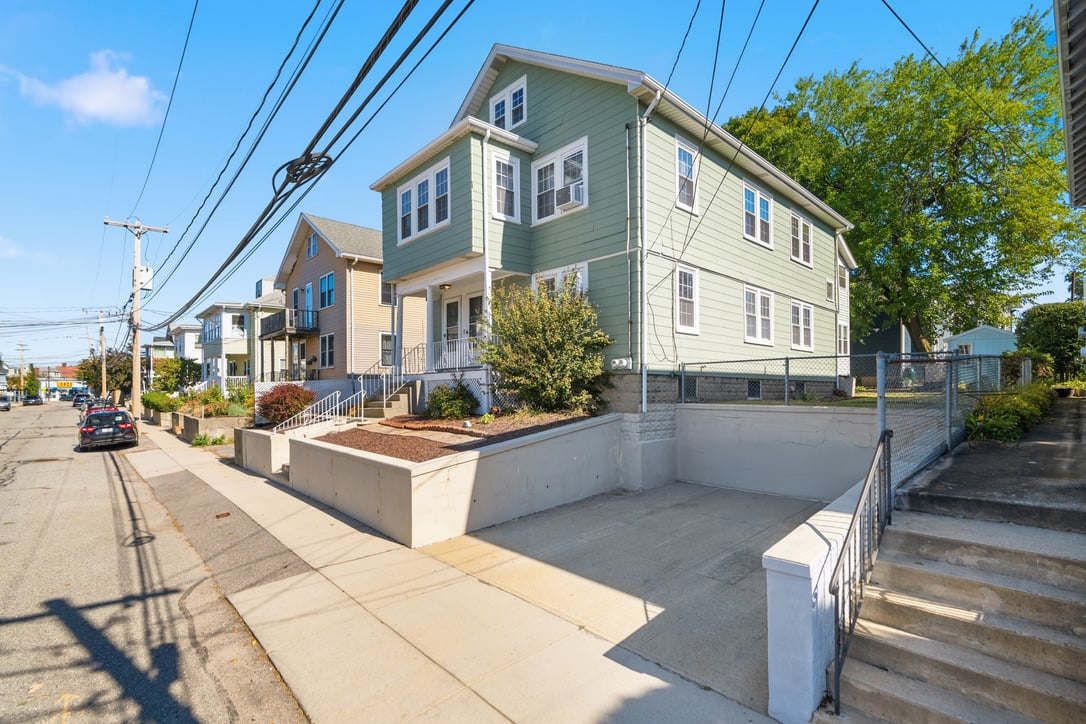
Selling a two-family you live in is two sales to the IRS: your own unit, whose gain can be tax-free, and the unit you rent, whose gain is taxable. If you own a two-family in Watertown or one like it in Waltham or Newton, here is how the split works, what the rented half owes on a long-held building, and how an exchange defers it.
- IRS Publication 523, the 2025 edition, names a duplex with the owner living in one unit and a tenant in the other as property with a separate rental portion, and the home sale exclusion generally does not cover gain on that portion, per the IRS guide to selling your home.
- Revenue Procedure 2005-14, effective January 27, 2005, lets a single sale use both the home sale exclusion and a like-kind exchange, applying the exclusion first and deferring gain on a separate rental or business portion under section 1031, per the Treasury Department's published text.
- Section 1031(a)(3) of the tax code requires replacement property to be identified within 45 days of a sale and received by the earlier of day 180 or that year's return due date, so a closing after October 17, 2026 runs into the April 15, 2027 due date unless the return is extended, per the code as published by the Government Publishing Office.
- Massachusetts taxes long-term capital gains at 5.00 percent and adds a 4 percent surtax on 2026 taxable income above $1,107,750, per the Department of Revenue's tax rate table updated December 30, 2025.
- A two-family at 38-40 Pequossette St. in Watertown sold for $1,050,000 in the week ending September 13, 2026, per Watertown News.
Why is selling a two-family you live in taxed as two sales?
Because the IRS treats the unit you rent as separate property from the unit you live in, only your own unit's gain can qualify for the home sale exclusion. Publication 523 puts a duplex with the owner in one unit and a tenant in the other squarely in that category, so the sale price and your original cost both get divided between the two.
The exclusion on your own unit is up to $250,000 of gain, or $500,000 for a married couple filing jointly, as long as you owned and lived there for at least two of the five years before the sale. Massachusetts conforms to the same federal exclusion, per the Governor's fiscal 2026 tax expenditure budget, so a gain the IRS excludes is excluded here too.
The split is usually done by square footage, which Revenue Procedure 2005-14 calls an appropriate method. A classic Watertown two-family with matching first and second floor flats lands close to 50/50. A finished third floor attached to the owner's unit, or a bigger owner's flat, moves the line, so get the measurements before you list, not after the closing.
What does the rented half owe on a long-held Watertown two-family?
On a Watertown two-family bought for $250,000 in 1998 and sold for $1,050,000, the owners' unit owes nothing and the rented unit carries about $475,000 of taxable gain and roughly $100,000 of federal and Massachusetts tax. The sale price is real: it is what the Pequossette Street two-family brought in September. The rest is a worked example, not a client file.
The assumptions: a married couple filing jointly, two equal units, 40 percent of the 1998 price allocated to land, no improvements, and every figure before selling costs, which shrink the gain on both halves. Land is never depreciated, so the depreciable building share of the rented unit is $75,000 of the $125,000 it cost.
Residential rental buildings are depreciated over 27.5 years under section 168(c), per the tax code's depreciation schedule, so a unit rented since 1998 has used up all $75,000. That counts even if you never claimed a dollar of it. Section 1016(a)(2) reduces your basis by the depreciation you were allowed to take, not just what you took, per the basis rules at Cornell's Legal Information Institute.
The owners' unit | The rented unit | |
|---|---|---|
Share of the sale price | $525,000 | $525,000 |
Share of the 1998 price | $125,000 | $125,000 |
Depreciation counted against basis | $0 | $75,000 |
Gain | $400,000 | $475,000 |
Excluded as a home sale | $400,000 | $0 |
Federal tax at the top rates, 25 percent on depreciation and 15 percent on the rest | $0 | $78,750 |
Massachusetts tax at 5.00 percent | $0 | $23,750 |
Total at those rates, before the investment income tax | $0 | $102,500 |
Those federal rates are ceilings for most couples. The $75,000 depreciation slice is taxed at no more than 25 percent, and less when your ordinary bracket is lower, and the other $400,000 at no more than 15 percent for most individuals, per the IRS capital gains topic page, updated September 24, 2026. Your other income sets the real rates, which is why your CPA runs the final number.
The rented unit's gain is also investment income. Section 1411 adds a 3.8 percent tax on the lesser of that income or the amount by which a joint return's modified adjusted gross income tops $250,000, per Cornell's copy of the statute. With $100,000 of other income, that adds another $12,350 on top of the table.
This couple stays far under the $1,107,750 surtax line. A three-family like the one on Cypress Street that sold for $1,319,000 the same week, or a sale in a big income year, gets a lot closer.
How do you defer the tax on the unit you rented?
You exchange the rented unit's share of the sale into other investment real estate under section 1031, which Revenue Procedure 2005-14 allows in the same sale where you exclude the gain on your own unit. The Treasury's Example 2 does exactly this for a home with a separate guesthouse used as an office: the house gain is excluded, and the separate unit's gain is deferred.
In practice the closing splits the money. Your unit's $525,000 comes to you, and the rented unit's $525,000 goes to a qualified intermediary, because the exchange regulations treat a deal as a sale once the cash reaches you before the replacement property does, per Treasury regulation 1.1031(k)-1. The intermediary has to be under contract before you close.
To defer all $475,000 of gain, buy at least $525,000 of replacement property and put all of that share's cash into it. Spend less and section 1031(b) taxes the difference, up to the gain. The two-bedroom condo at 48 Bigelow Ave. that sold for $615,000 the same week as the Pequossette Street two-family is the right size for a share this big.
The calendar is the trap. A December 1, 2026 closing has to identify its replacement by January 15, 2027 and finish by April 15, 2027, which is 135 days, not 180, unless you extend your 2026 return. With the extension, the deadline moves out to May 30, 2027.
What this means if you live in your two-family in Watertown, Waltham or Newton
If you bought your two-family in the 1990s, live upstairs and rent downstairs, selling is really two decisions. Cash out, and the couple in the example pays roughly $100,000 or more on the rented half, before selling costs. Exchange that half, and they take $525,000 tax-free while the other $525,000 becomes a Waltham condo or another rental worth at least as much, with the tax deferred and a landlord's job attached.
If you have already moved out and now rent both units, the clock is running on your old unit's exclusion. The two-of-five-year test means a sale within three years of the day you moved out still qualifies, so an owner who moved to a Newton condo in the fall of 2024 has until the fall of 2027.
A widowed owner who has not remarried and sells within two years of a spouse's death can still use the $500,000 figure, per Publication 523. After that window, the single owner's $250,000 applies.
The closing date is a tax decision too. A December closing puts the gain in 2026 and squeezes an exchange into 135 days unless you extend. A closing on January 4, 2027 puts the gain in 2027 and runs the full 180 days to July 3, 2027. We are a brokerage, not a tax adviser, so take both dates to your CPA before you sign a purchase and sale agreement.
The land matters too. If your two-family sits inside an MBTA Communities overlay, such as Belmont's districts around Belmont Center and Waverley Square, a builder may bid for the lot rather than the building, which can raise the price, and the gain, on both halves. Our MBTA 3A zoning hub maps those districts town by town.
Frequently asked questions about selling a two-family you live in
Do I pay capital gains tax when I sell a two-family I live in?
You can exclude up to $250,000 of gain, or $500,000 for a married couple filing jointly, on the unit you live in, but the gain on the unit you rent is taxable unless you defer it with a section 1031 exchange.
How is the sale of a two-family split between the home and the rental?
Revenue Procedure 2005-14 treats square footage as an appropriate way to allocate the sale price and the original cost, so a two-family with two equal flats is usually split about 50/50 between the owner's home and the rental.
Do I owe tax on depreciation I never claimed on the rental unit?
Yes, the tax code reduces your basis by the depreciation you were allowed to take on the rental unit whether or not you claimed it, and that part of the gain is taxed at a federal rate of up to 25 percent.
Can I do a 1031 exchange on just the rental half of a two-family?
Yes, Revenue Procedure 2005-14 lets one sale apply the home sale exclusion to the unit you lived in and a section 1031 exchange to the separate rental unit.
What is the 1031 exchange deadline for a sale that closes in late 2026?
A 1031 exchange must be completed by the earlier of 180 days after the sale or the due date of that year's tax return, so a sale that closes after October 17, 2026 must finish by April 15, 2027 unless the seller extends the 2026 return.
Does Massachusetts tax the gain when I sell my two-family?
Massachusetts follows the federal home sale exclusion and taxes the remaining long-term capital gain at 5.00 percent, plus a 4 percent surtax on 2026 taxable income above $1,107,750.
The next step if you are selling a two-family you live in
Ask for a two-family sale plan before you pick a list date. PH Realty Group prices the building, documents each unit's square footage and condition so your CPA can split the sale between your home and your rental, and sets a closing date that fits the exchange calendar.
If you plan to exchange the rented share, we also build the shortlist of Greater Boston rentals you can identify inside the 45 days, through our multifamily investing work in Greater Boston, starting from a current valuation of your two-family. Ethan Piani-Hohmann, PH Realty Group, (781) 879-0863, [email protected].