Figures current as of October 29, 2026. Lead Law and tax credit rules reviewed yearly; next review October 2027.
If you own a rental in Watertown or Waltham, odds are it was built before 1978, and that puts it under the Massachusetts Lead Law the day a child under six moves in. You cannot turn that family away because the unit has not been deleaded. This post covers what the law requires, what it costs to get ahead of it, and why the right time to deal with it is before your next vacancy, not after an application lands.
Watertown's share of pre-1978 housing is 78 percent, per the Massachusetts Department of Public Health's 2024 childhood lead surveillance report.
Waltham's share of pre-1978 housing is 68 percent, per the same 2024 DPH report, which draws on the 2022 five-year American Community Survey.
A Massachusetts landlord cannot refuse to rent to, or evict, a family because the unit has lead paint, according to the DPH Childhood Lead Poisoning Prevention Program.
The Massachusetts deleading tax credit is the lesser of the cost or $1,500 per unit for full compliance, and the lesser of half the cost or $500 per unit for interim control, under 830 CMR 62.6.3 from the Department of Revenue.
Does the Massachusetts Lead Law apply to my Watertown or Waltham rental?
It applies if the building was put up before 1978 and a child under six lives in the unit, and in these two towns that describes most of the rental stock. The 2024 DPH surveillance report puts pre-1978 housing at 78 percent of Watertown's units and 68 percent of Waltham's. Statewide the figure is about 66 percent, so Watertown runs older than Massachusetts as a whole.
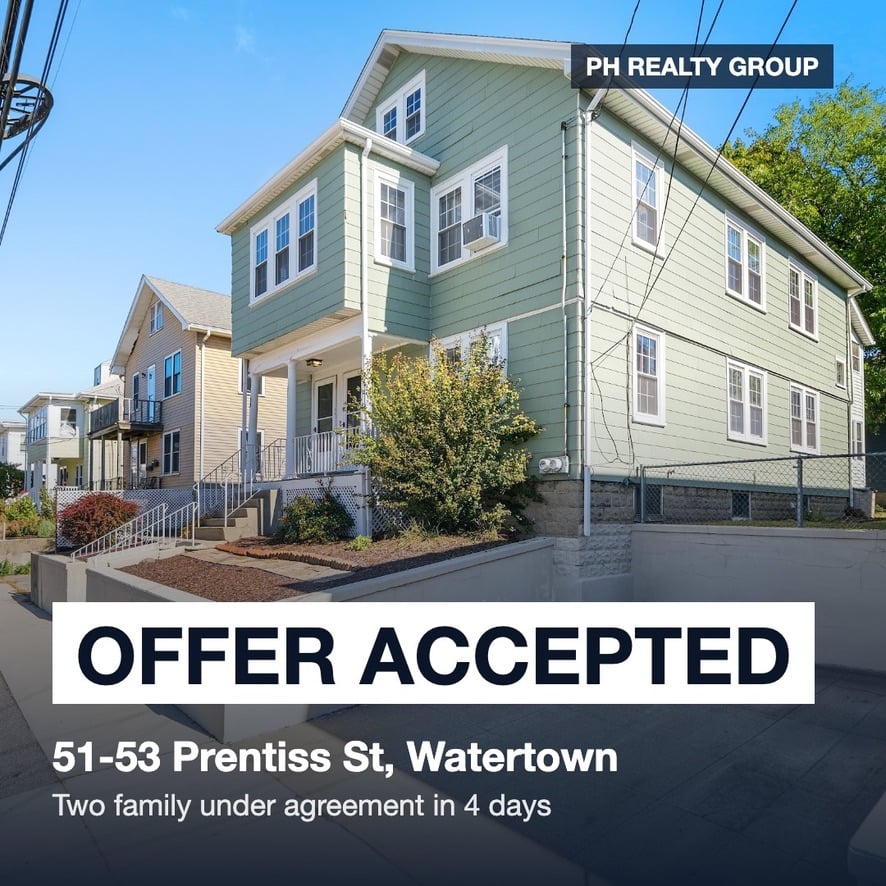
That tracks with what the streets look like. The two-families off Mount Auburn Street and around Coolidge Square, the deckers near Waltham's Moody Street, the Bemis and Lakeview side streets: nearly all of it is prewar or postwar housing with original trim, windows and porches. Those friction surfaces are exactly where lead hazards live.
The trigger is the child, not the lease. The law applies whether the unit is rented or owner occupied, and whether or not any child has an elevated blood lead level. A building can sit legally untouched for decades and become an obligation the week a family with a three year old signs. For a deeper look at the housing stock and prices in town, see our Watertown real estate guide.
Can a landlord refuse to rent to a family because of lead paint?
No. The DPH Lead Law program states plainly that an owner cannot evict or refuse to rent to anyone because of lead paint, and that doing so is discrimination carrying penalties. Complaints go to the Massachusetts Commission Against Discrimination.
This is the part landlords get wrong most often, and usually not out of malice. An owner gets three applications, one lists a toddler, and the owner quietly picks one of the other two because deleading sounds expensive. That is the exact pattern the law prohibits, and asking about children's ages in order to steer around the Lead Law creates the paper trail a complaint is built on.
The disclosure side runs in parallel. Before any tenant signs a lease on a pre-1978 unit, children or not, the owner hands over the Tenant Lead Law Notification and Certification form, along with any lead inspection report and any Letter of Compliance or Letter of Interim Control on file. Skip that step and the owner has a second problem on top of the first.
What does deleading or interim control actually involve?
There are two compliant paths, and both start with a licensed lead inspector. Full deleading means correcting the hazards the inspector finds, passing a reinspection, and receiving a Letter of Full Compliance. Interim control is the shorter route: a licensed risk assessor identifies urgent hazards, those get fixed, and the owner receives a Letter of Interim Control, which per DPH gives up to two years to finish the job and reach full compliance.
Order matters here. Some of the work can be done by an owner after the inspection and with authorization, but stripping or sanding painted surfaces without the right controls can make a unit more dangerous than it was. Most of the cost is in windows, door jambs and porch rails, because those are the surfaces that rub, chip and create dust.
Liability is the reason none of this is optional. If a child is poisoned by hazards in the home, DPH says the owner is legally responsible, and a waiver signed by the tenant does not change that. A compliance letter in the file is the cleanest evidence an owner has that the hazards were dealt with.
How much does the Massachusetts deleading tax credit cover?
The state credit covers the lesser of your actual cost or $1,500 per unit for full deleading, and the lesser of half the cost or $500 per unit for interim control. Those amounts come from the Department of Revenue regulation 830 CMR 62.6.3, and any unused credit carries forward for up to seven later tax years.
On a Watertown two-family, that means up to $3,000 back against state income tax for full compliance on both units, or up to $1,000 for interim control on both. It will not cover the whole job on an older house, but it narrows the gap, and the carryforward means a landlord with modest Massachusetts tax liability still uses the full amount over time.
Low cost financing has also existed through MassHousing's Get the Lead Out program. Eligibility and terms change, so confirm the current version before you plan around it.
What this means if you rent out a unit in Watertown or Waltham
If you own a pre-1978 two-family or three-decker and you rent the second unit, you are carrying a compliance obligation that can switch on with a single application. The question is not whether to deal with it. The question is whether you deal with it on your schedule or the tenant's.
Here is the arithmetic that makes the schedule matter. Say a Watertown two-bedroom rents for $3,200 a month. Every week it sits empty costs about $740. If a qualified family applies in May for a June 1 start, and you have no letter on file, you are either rushing an inspection and abatement into a few weeks or watching the vacancy run while you sort it out. Neither is cheap, and the rushed version usually costs more per surface.
The owner who orders the inspection in winter, does the work while the unit is turning over anyway, and lists in spring with a Letter of Compliance attached is in a different position. The disclosure package is clean, every applicant can be considered on the merits, and the compliance letter becomes a selling point to families who are specifically looking for one. If you plan to sell the building later, the same letter goes into the Property Transfer Lead Paint Notification, where a buyer otherwise has a 10 day window to inspect at their own expense before the Purchase and Sale.
Frequently asked questions
Does the Massachusetts Lead Law apply to a house built after 1978?
No, the Massachusetts Lead Law covers homes built before 1978, the year after lead-containing residential paint was banned nationally.
Do I need to delead if my current tenants have no children under six?
No, the deleading obligation is triggered when a child under six lives in the unit, but you still owe every new tenant the Tenant Lead Law Notification form before they sign.
Can a Waltham or Watertown landlord ask whether an applicant has young children?
Refusing a family because of lead paint is illegal discrimination under Massachusetts law, so landlords should not screen applicants on whether they have young children.
How much is the Massachusetts lead paint tax credit per unit?
The credit is the lesser of the cost or $1,500 per unit for full deleading and the lesser of half the cost or $500 per unit for interim control, with seven years of carryforward.
How long does a Letter of Interim Control last?
The Massachusetts Department of Public Health says a Letter of Interim Control gives an owner up to two years to complete deleading and obtain a Letter of Full Compliance.
Get a lead-ready turnover plan before your next vacancy
If your Watertown or Waltham rental was built before 1978 and you do not have a Letter of Compliance in the file, ask us for a lead-ready turnover plan. We will line up the inspection timing against your lease end date, build the vacancy cost into the math, and get the unit listed with its disclosure package complete. Start with our landlord leasing services or, if you would rather hand off the whole process, our property management page. You can also reach Ethan Piani-Hohmann at PH Realty Group directly at (781) 879-0863 or [email protected].