If you own a house or a small multifamily near Watertown Square, the ground under you changed in the last 18 months, and most owners have not caught up to it. Watertown rezoned the area around the Square to allow multifamily housing by right, and the city has now put out a concrete plan for what redevelopment looks like. This post explains what the Watertown Square rezoning actually did, what the demonstration plan means, and how both affect the value and the options on your parcel right now.
What did Watertown actually change about zoning near the Square?
Watertown adopted new zoning in November 2024 that allows multifamily housing by right across the Watertown Square area, and the state recognized it in April 2025. By right matters more than most owners realize. It means a compliant multifamily project no longer needs a special permit and the discretionary board fight that comes with it, which removes risk and time from a developer's math and raises what a buildable parcel is worth.
This zoning was Watertown's response to the state's MBTA Communities law, often called 3A, which requires transit-served communities to zone for multifamily near their cores. The mapped capacity around the Square is roughly 1,701 units of new housing potential. That number is not a construction forecast. It is a measure of how much development the new rules legally allow, and it is the reason buyers with development intent are now paying attention to blocks they ignored two years ago. If you want the mechanics of how 3A reshapes lot value across our towns, start with the PH Realty Group MBTA 3A zoning hub and the Watertown 3A page.
What is the Watertown Square demonstration project?
The demonstration project is the city's worked example of what the new zoning can produce, and its draft plan landed on April 9, 2026. It focuses on the public parking lot behind CVS and the surrounding parcels bounded by Spring Street, Summer Street, and Church Street. Both draft options carry the same core program: a multi-story residential building with about 247 housing units, ground-floor retail, a multi-story parking garage, and a public green space.
The timeline is deliberate, not immediate. The draft puts adoption and pre-development across 2026 and 2027, construction beginning around 2029, and the garage and units in operation near 2031. For a nearby owner, the takeaway is not that a tower goes up next spring. It is that the city has signaled, in writing and with a site plan, that this corridor is where density is heading, and that signal moves land pricing years before a shovel touches dirt.
What does this mean for my property value if I own near the Square?
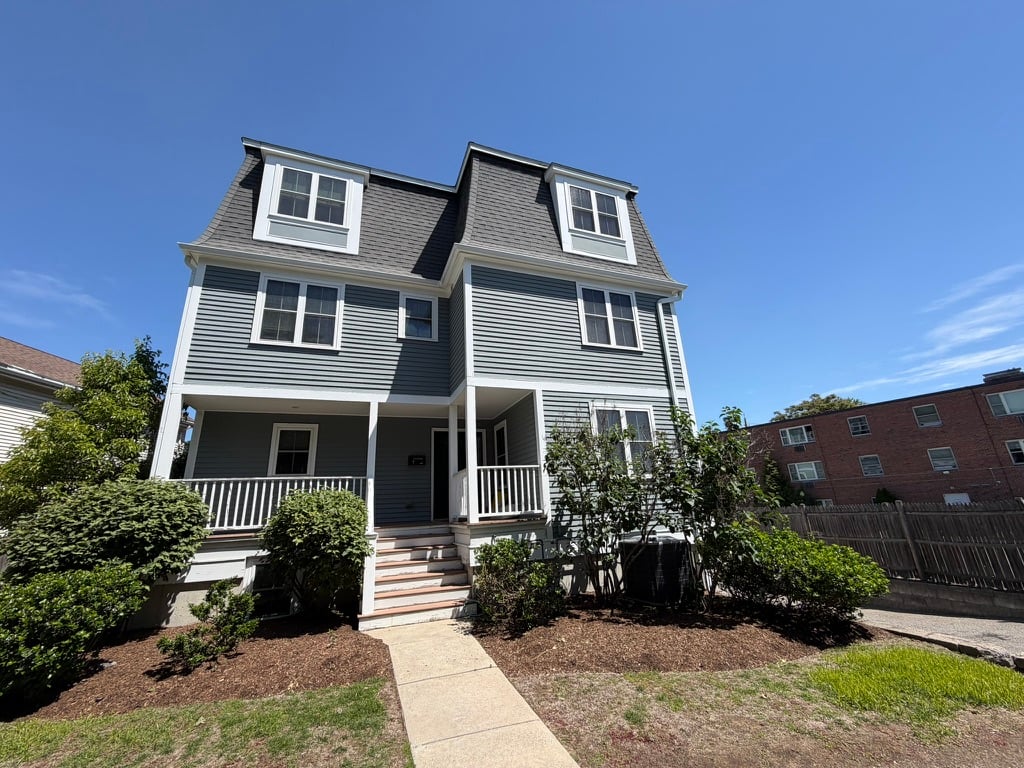
If your parcel sits inside or next to the rezoned area, its highest value is now tied to what can be built on it, not only to what sits on it today. A tired two-family on a well-located Watertown Square lot can be worth more to a builder assembling for a by-right project than to an owner-occupant, because the buyer is pricing the buildable envelope the new zoning unlocked. That is a different pool of buyers, and it often clears above a conventional comparable-based estimate.
The catch is that generic online value tools cannot see any of this. A national estimate reads your address as a single-family or a two-family and prices it against recent street sales. It has no idea the parcel now permits multifamily by right, sits three blocks from a state-designated growth node, or falls inside a development assembly a builder is quietly working. That gap between the algorithm's number and the real number is exactly where owners near the Square leave money on the table. A hyperlocal read on Watertown real estate is the only way to price it correctly.
What should I check before I sell or hold a multifamily near Watertown Square?
Before you make any move, confirm the three things that decide both your value and your ability to close cleanly in Massachusetts. First, pull your parcel's current zoning designation and whether it falls inside the rezoned Watertown Square area, because that single fact separates a standard resale from a development sale. Second, if the property is a condo or you are converting, line up the 6D certificate showing condo fees are paid current, since no unit closes without it. Third, get the smoke and carbon monoxide certificate from the Watertown Fire Department, which Massachusetts requires at the sale of every one- to four-unit dwelling under G.L. c. 148, and which trips up sellers who wait until the last week.
It also pays to know your paperwork trail. Watertown sits in Middlesex County, so your deed and any liens record at the Middlesex South Registry of Deeds in Cambridge, and a clean title readout there tells you fast whether an old mortgage discharge or a lien will slow a sale. If you are weighing sell now against hold and reposition, that decision should be driven by whether your specific parcel gained buildable upside from the rezoning, which is a parcel-level question, not a market-wide one.
Frequently Asked Questions
Does the Watertown Square rezoning mean I can build more units on my lot?
It depends on where your parcel sits, because the by-right multifamily allowance applies to the mapped Watertown Square area rather than to every lot in the city. The only reliable answer comes from checking your specific parcel against the adopted zoning map, which we can do for you.
Is the 247-unit project going to be built right next to me?
The 247-unit figure is the demonstration project centered on the public lot behind CVS between Spring, Summer, and Church Streets, not a plan for every block. Its value to a nearby owner is as a signal of where density is heading, since the draft timeline runs construction around 2029 and operation near 2031.
Will the new zoning raise or lower my property value?
For most parcels inside or adjacent to the rezoned area it raises value, because by-right multifamily potential adds a pool of development buyers pricing the buildable envelope rather than only the existing structure. The size of that lift is parcel-specific and is exactly what a hyperlocal valuation measures.
Do I need a smoke and carbon monoxide certificate to sell in Watertown?
Yes, Massachusetts requires a smoke and carbon monoxide detector certificate from the local fire department at the sale of any one- to four-unit home, and in Watertown that inspection comes from the Watertown Fire Department. Schedule it early, since inspection backlogs can delay a closing.
How do I find out if my parcel is inside the rezoned Watertown Square area?
You check your address against the city's adopted Watertown Square zoning map and confirm the district it now falls in. PH Realty Group runs that check for owners as part of a property review, so you know your position before you decide anything.
Thinking about your options near Watertown Square?
The rezoning and the demonstration plan have changed the math on a lot of Watertown Square properties, and the owners who move first with accurate parcel-level numbers are the ones who capture the upside. If you want to know exactly where your property stands, reach out to PH Realty Group for a hyperlocal review built on the real zoning and the real buyer pool, not a national estimate.