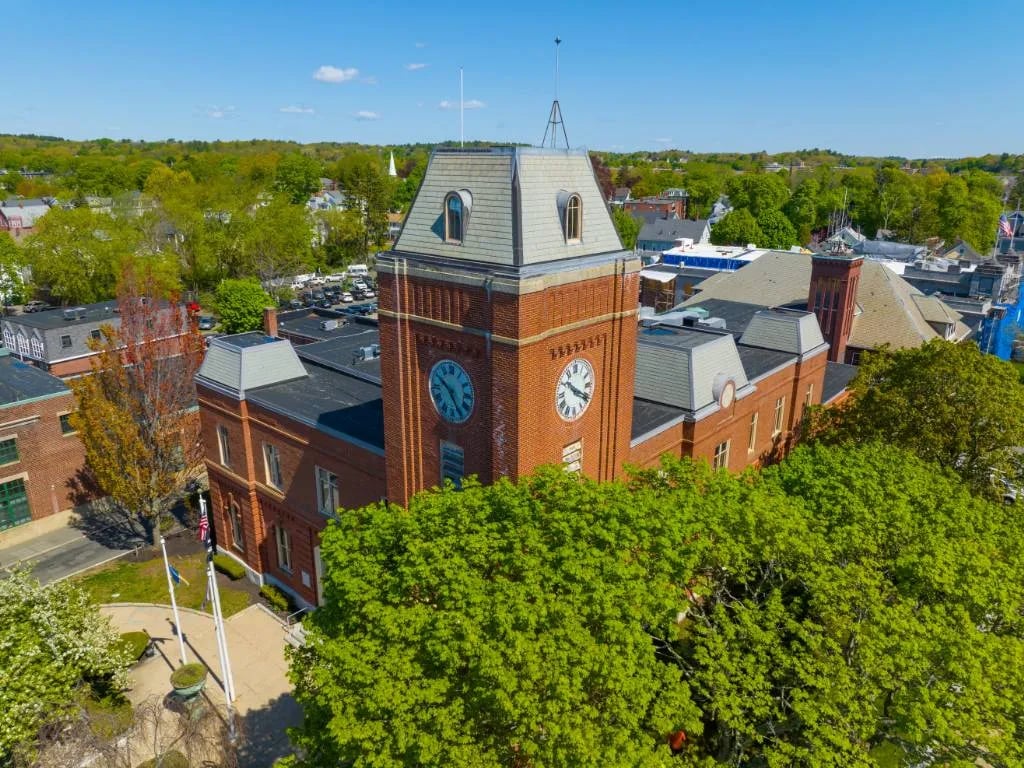
Melrose sits about 7 to 9 miles north of downtown Boston, bordered by Malden to the south, Saugus to the east, Wakefield to the north, and Stoneham to the west. It is a small city of around 28,000 residents covering roughly 4.7 square miles, dense enough to feel urban in its downtown and along its main corridors, residential enough elsewhere that the side streets feel suburban. Its identity rests on three things: walkable village character, strong transit, and the Middlesex Fells Reservation, the 2,500 acre green space that frames its western edge.
Melrose's housing stock is dominated by Victorians, colonials, and capes, along with a healthy supply of two and three family homes that make up a meaningful multifamily inventory rare in this part of Greater Boston. The median single family sale price runs around $900,000, with recent monthly readings closer to $950,000 and prices up roughly 11 to 14 percent year over year. Homes typically sell in 15 to 27 days, often with multiple offers, and a significant share close above list. For buyers, that means moving decisively and being pre approved. For sellers, well presented Melrose inventory tends to clear quickly. The two and three family segment is one of the more reliable small multifamily markets north of the city, supported by the same renter demand that fills the apartment buildings near the train stations.
Melrose has three MBTA commuter rail stations on the Haverhill Line within the city: Wyoming Hill, Cedar Park, and Melrose Highlands. From those, the trip to North Station runs about 20 to 30 minutes. The Orange Line's Oak Grove terminus sits just over the southern border in Malden, a short walk or bus ride for many Melrose residents, and gives direct subway access to downtown Boston without a transfer. By car, Melrose is bordered by Interstate 93 to the west and Route 1 to the east. The combination of three commuter rail stations and an adjacent Orange Line terminus makes Melrose one of the most transit accessible communities in the corridor.
Melrose Public Schools rate 6 to 7 out of 10 on GreatSchools, solid for the region, with one high school (Melrose High School) and several elementary feeders including Hoover, Lincoln, Roosevelt, Horace Mann, and Winthrop. Schools are part of why families stay in Melrose, but unlike Newton or Lexington, school assignment is not the dominant pricing driver here. The market is driven more by transit access, walkability, and the value gap between Melrose and the more expensive towns south and west. For buyers focused on schools and willing to pay more, Reading, North Reading, and Lynnfield rank higher in the immediate area.
Melrose has several distinct neighborhoods. Downtown Melrose, anchored by Main Street, is the walkable commercial heart with restaurants, the city hall, and Memorial Hall. Wyoming and Cedar Park sit around their commuter rail stations and command premiums for their walk to train convenience. Melrose Highlands, the northernmost neighborhood, is anchored by its own commuter rail station and feels quieter and more residential. The Melrose East Side, between Main Street and Route 1, offers larger lots and traditional residential streets. Oak Grove and Pine Banks at the southern edge of the city share the Orange Line proximity and tend to be more affordable. The Horace Mann neighborhood east of downtown is a settled residential area with a strong sense of place. The Middlesex Fells Reservation forms the western border and gives every part of the city access to substantial green space, ponds, and trails.
Melrose has a population of around 28,000 and a median household income of about $127,000, well above the Massachusetts average. The city draws a mix of young professionals priced out of Boston and Somerville, growing families looking for transit access on a more reasonable budget, and longer term residents who stay through the school years. Owner occupancy is around 67 percent, which is higher than nearby Malden but lower than Lexington or Belmont, reflecting the role multifamily plays in the housing stock. Crime is low relative to national averages, and community character is notably walkable and engaged, with active Main Street businesses and civic life.
Melrose adopted compliant MBTA Communities zoning in October 2024 as part of its recodified zoning ordinance, and the state determined the city compliant in September 2025. The compliance districts cluster around the three commuter rail stations, with at least 75 percent of the district inside transit station areas, making it one of the more genuinely transit oriented overlay maps in the corridor. For owners and investors, where the overlay applies materially changes what is permitted by right. We wrote a full breakdown of Melrose's MBTA 3A zoning and what it means for parcels.
Melrose offers a combination that has become rare in Greater Boston: real urban character, three rail stations and an adjacent subway terminus, and an entry price well below Newton, Belmont, or Arlington. That makes it one of the most defensible value plays in the corridor. For buyers, the market moves fast, so being pre approved and decisive matters. For sellers, well prepared homes tend to clear quickly. For multifamily investors, the two and three family inventory and the new 3A zoning together make Melrose one of the most interesting transit oriented small multifamily markets we work.
PH Realty Group works with buyers, sellers, and investors across Melrose. If you are evaluating a purchase, looking to sell, or trying to understand what your property is worth in the current market, reach out directly.
What is the median home price in Melrose? The median single family sale price in Melrose runs around $900,000, with recent monthly readings closer to $950,000, up about 11 to 14 percent year over year. Homes typically sell in 15 to 27 days, often above asking.
How are Melrose Public Schools rated? Melrose Public Schools rate 6 to 7 out of 10 on GreatSchools, solid for the region. Melrose has one high school and several elementary feeders including Hoover, Lincoln, Roosevelt, Horace Mann, and Winthrop.
Does Melrose have commuter rail and subway service? Yes. Melrose has three MBTA commuter rail stations on the Haverhill Line within the city, Wyoming Hill, Cedar Park, and Melrose Highlands, and the Orange Line's Oak Grove terminus sits just over the southern border in Malden, giving direct subway access to downtown Boston.
What are the best neighborhoods in Melrose? Distinct neighborhoods include Downtown Melrose, Wyoming, Cedar Park, Melrose Highlands, Melrose East Side, Oak Grove and Pine Banks, and Horace Mann. Neighborhoods around the commuter rail stations and downtown tend to command premiums for walkable transit access.
Is Melrose a good investment market? Yes, particularly for transit oriented small multifamily. The city has three commuter rail stations and an adjacent Orange Line terminus, a meaningful two and three family inventory, and new MBTA 3A zoning that allows by right multifamily near the stations. The entry price is well below Newton, Belmont, or Arlington, which makes Melrose one of the most defensible value plays in the corridor.
29,488 people live in Melrose, where the median age is 44.3 and the average individual income is $65,038. Data provided by the U.S. Census Bureau.
Total Population
Median Age
Population Density Population Density This is the number of people per square mile in a neighborhood.
Average individual Income
There's plenty to do around Melrose, including shopping, dining, nightlife, parks, and more. Data provided by Walk Score and Yelp.
Explore popular things to do in the area, including Mahoney J F & Sons, American Health Holding, and Amer Soc of Abdominal Surgeons.
| Name | Category | Distance | Reviews |
Ratings by
Yelp
|
|---|---|---|---|---|
| Active | 0.18 miles | 0 reviews | 0/5 stars | |
| Active | 0.18 miles | 0 reviews | 0/5 stars | |
| Active | 0.3 miles | 0 reviews | 0/5 stars | |
| Active | 0.42 miles | 0 reviews | 0/5 stars | |
| Active | 0.49 miles | 0 reviews | 0/5 stars | |
| Active | 0.84 miles | 0 reviews | 0/5 stars | |
| Active | 1.6 miles | 1 review | 5/5 stars | |
| Beauty | 0.3 miles | 0 reviews | 0/5 stars | |
| Beauty | 0.33 miles | 0 reviews | 0/5 stars | |
| Beauty | 0.39 miles | 7 reviews | 5/5 stars | |
| Beauty | 0.57 miles | 16 reviews | 4/5 stars | |
|
|
||||
|
|
||||
|
|
||||
|
|
||||
|
|
||||
|
|
Melrose has 12,368 households, with an average household size of 2.36. Data provided by the U.S. Census Bureau. Here’s what the people living in Melrose do for work — and how long it takes them to get there. Data provided by the U.S. Census Bureau. 29,488 people call Melrose home. The population density is 6,297 and the largest age group is Data provided by the U.S. Census Bureau.
Total Population
Population Density Population Density This is the number of people per square mile in a neighborhood.
Median Age
Men vs Women
Population by Age Group
0-9 Years
10-17 Years
18-24 Years
25-64 Years
65-74 Years
75+ Years
Education Level
Total Households
Average Household Size
Average individual Income
Households with Children
With Children:
Without Children:
Marital Status
Blue vs White Collar Workers
Blue Collar:
White Collar: