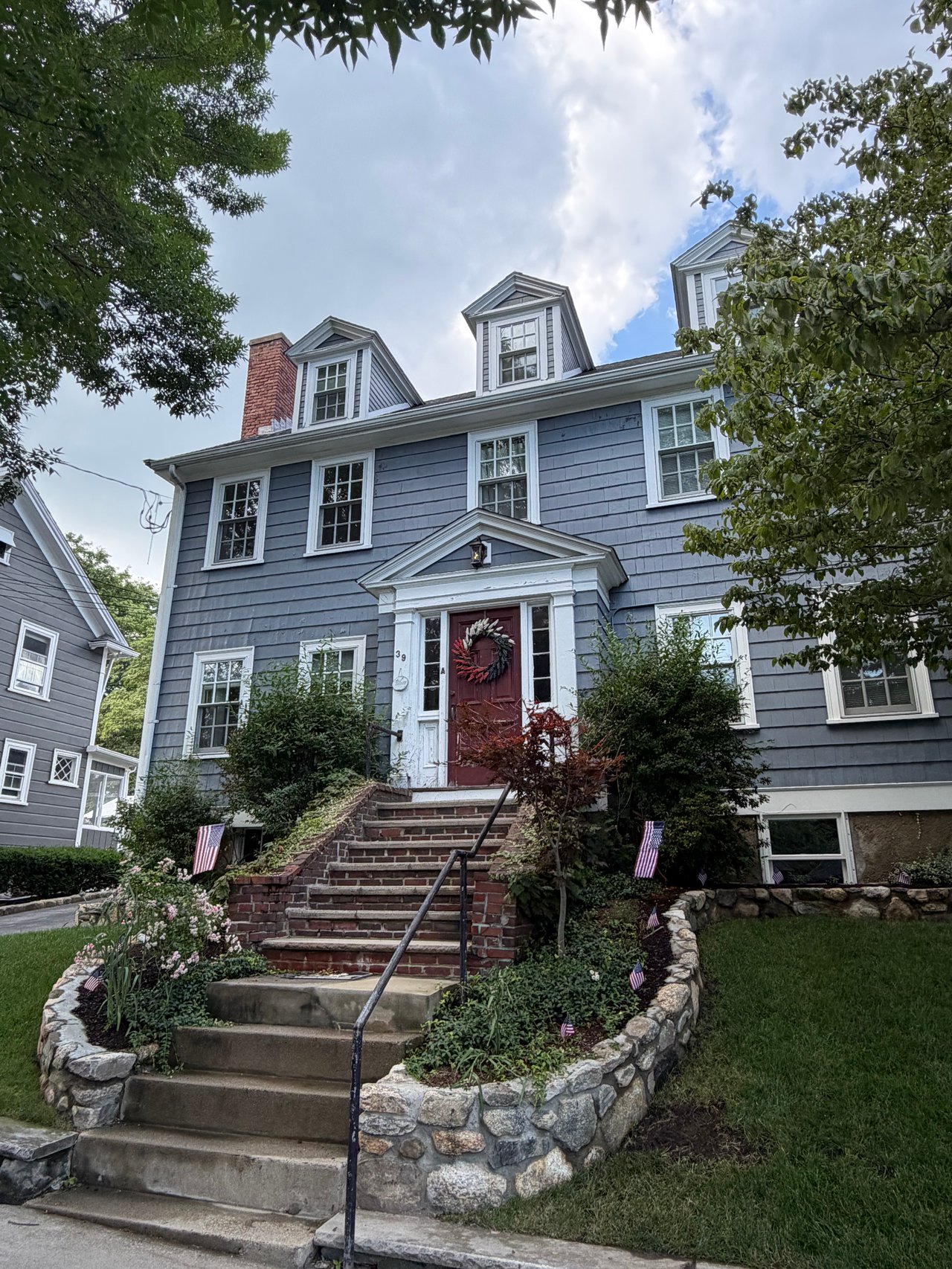
If you're living in Newton MA and trying to decide whether to rent or buy, you're probably finding that the standard advice doesn't quite fit. Newton is an expensive, high demand market where buying requires serious capital and renting is not cheap either. The rent or buy Newton MA question has a real answer, but it depends on where you are financially, how long you plan to stay, and what you actually want out of where you live. Here's how to think through it clearly.
Why Newton Makes the Decision Harder Than Most Markets
In most markets, the rent vs buy math leans toward buying once you plan to stay five or more years. Newton complicates that because both sides of the ledger are expensive. Purchase prices are high, which means down payments are substantial and monthly carrying costs on a mortgage can run significantly above what you'd pay to rent a comparable unit. At the same time, Newton rents are not cheap, particularly for single family homes, larger condos, or anything in the more desirable villages like Newton Centre, Waban, or Chestnut Hill.
This means neither option is obviously efficient. What it comes down to is which form of inefficiency you're willing to accept, the flexibility cost of renting or the opportunity cost of a large down payment tied up in a home.
The Case for Buying in Newton
Newton has historically been one of the most stable and appreciating markets in Greater Boston. The school system is a genuine draw that sustains demand across economic cycles. The D branch of the Green Line runs through Newton from Riverside to Kenmore, with stops at Newton Highlands, Newton Centre, Waban, Eliot, and several others, which makes it one of the few suburbs with actual rail access into the city. That combination of schools and transit creates a floor on demand that most suburbs can't match.
If you're planning to stay for at least five to seven years, buying in Newton is a strong long term play. Equity builds through both principal paydown and appreciation, and you're not subject to rent increases or lease nonrenewals. For families who want to lock into the school district, buying also removes the uncertainty of having to move when a landlord decides to sell or redevelop.
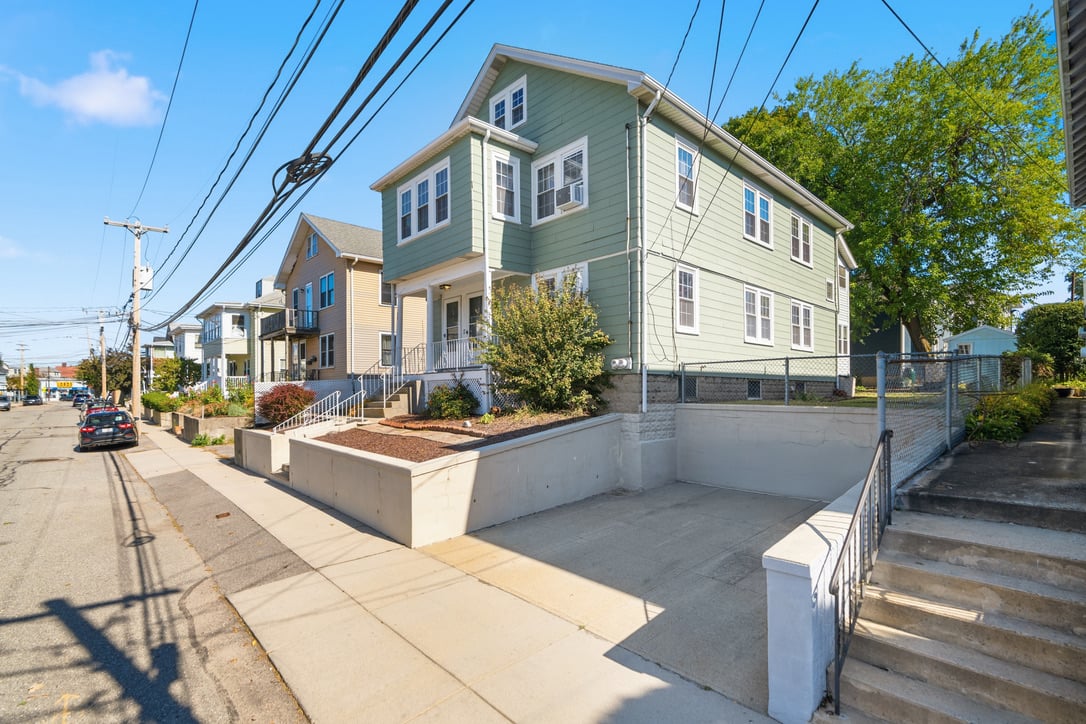
Newton is also a market where the multifamily stock, two family homes and triple deckers, gives buyers an opportunity to offset housing costs by renting one or two units. If you can find the right two family in Newtonville, Newton Upper Falls, or along the Waltham border, house hacking is a viable strategy that changes the math considerably.
The Case for Renting in Newton
The honest case for renting in Newton starts with the down payment. To buy a median priced single family in Newton, you're looking at a down payment that could represent years of savings for most buyers. If that capital is doing meaningful work elsewhere, in a business, in investments, in an emergency fund that isn't fully built yet, locking it into a down payment has a real opportunity cost that most rent vs buy calculators don't properly account for.
Renting also makes sense if your timeline is under three to four years. Transaction costs in Massachusetts are real: agent commissions, closing costs, transfer taxes, and moving costs can easily add up to several percent of the purchase price. If you're not planning to stay long enough to absorb those costs through appreciation and equity, you're likely better off renting.
There's also a lifestyle flexibility argument. Newton is a large city by Massachusetts standards, with thirteen distinct villages each with different characters. Renting gives you the ability to try a neighborhood before committing. Someone who thinks they want Newton Centre might discover that Newtonville or West Newton actually fits their daily routine better. That's a real benefit when purchase prices are high enough that picking the wrong location is costly.
The Variables That Actually Move the Answer
A few specific factors tend to determine which direction makes sense for most people in Newton's market.
Time horizon is the biggest one. Under three years, renting is almost always the better financial decision. Over seven years, buying typically wins. The three to seven year range is genuinely ambiguous and depends heavily on the specific property and price.
Down payment size matters a lot. If you can put 20% down on a Newton property, your monthly carrying costs are more competitive with renting. If you're looking at a smaller down payment, mortgage insurance and higher monthly costs change the comparison significantly.
The type of property also matters. Condos in Newton carry HOA fees that can be substantial and reduce the ownership advantage in the rent vs buy comparison. Single family homes and multifamily properties tend to offer better long term value for buyers willing to take on more responsibility.
Finally, what you're renting and what you're comparing it to has to be apples to apples. Comparing a two bedroom apartment rental to the cost of buying a four bedroom single family is not a fair comparison. Many renters in Newton are renting something significantly smaller or less finished than what they'd buy, which artificially inflates the apparent case for renting.
How to Make the Call
The most useful framework is to ask yourself three questions honestly. How long do I actually plan to be in Newton? Do I have the down payment without depleting reserves I'd need for something else? And is the property I'm looking at priced fairly relative to comparable sales, not just comparable rentals?
If the answers are seven or more years, yes, and yes, then buying in Newton is very likely the right move. If any of those answers is uncertain, renting and continuing to build financial position is not a bad outcome. Newton's rental market is healthy enough that you can live well while waiting for the right time or the right property.
Get an Honest Read on Both Sides of the Newton Market
If you're actively evaluating this decision in Newton and want a ground level read on what's available to buy or rent right now, PH Realty Group works across Newton and the surrounding towns regularly. Reach out and we can give you an honest picture of both sides of the market. Reach us at [email protected], call (617) 393 3458, or text (781) 879 0863.
Frequently Asked Questions
Is it better to rent or buy in Newton MA?
Whether renting or buying makes more sense in Newton MA depends primarily on your time horizon, down payment capacity, and financial flexibility. Buying is generally advantageous for buyers who plan to stay seven or more years and can put down 20%, while renting makes more sense for shorter timelines or buyers who haven't fully built their financial position.
How long do you need to stay in Newton for buying to make financial sense?
Most buyers in Newton need to stay at least five to seven years for the purchase to make financial sense after accounting for transaction costs, closing costs, and the opportunity cost of a large down payment. Shorter timelines generally favor renting.
What is the Green Line access like in Newton?
The D branch of the MBTA Green Line runs through Newton with stops at Newton Highlands, Newton Centre, Waban, Eliot, and Chestnut Hill, among others, before continuing into Boston toward Kenmore Station. This makes Newton one of the few suburbs with direct rail access into the city, which is a meaningful factor in both rental and purchase demand.
Can you house hack in Newton MA?
Newton has a supply of two family and triple decker homes, particularly in villages like Newtonville, Newton Upper Falls, and along the western edge of town near the Waltham border. Buyers who purchase a multifamily and rent one or more units can use the rental income to offset mortgage costs significantly, which changes the rent vs buy calculation in favor of ownership.
Are Newton MA rents expensive compared to nearby towns?
Newton rents are generally higher than those in adjacent towns like Waltham, Watertown, and Belmont, reflecting the premium for Newton's school district reputation and Green Line access. The gap narrows as you move toward the western villages and widens in Newton Centre, Chestnut Hill, and areas close to the D Line stations.
What are the best villages in Newton for renters?
Newtonville and West Newton tend to offer more rental inventory at relatively accessible price points compared to Newton Centre or Chestnut Hill. Both have their own commercial strips, commuter rail access at the Newtonville and West Newton stations on the Framingham/Worcester Line, and easy access to Route 90 for drivers. You can compare the villages on our Newton neighborhood guide.