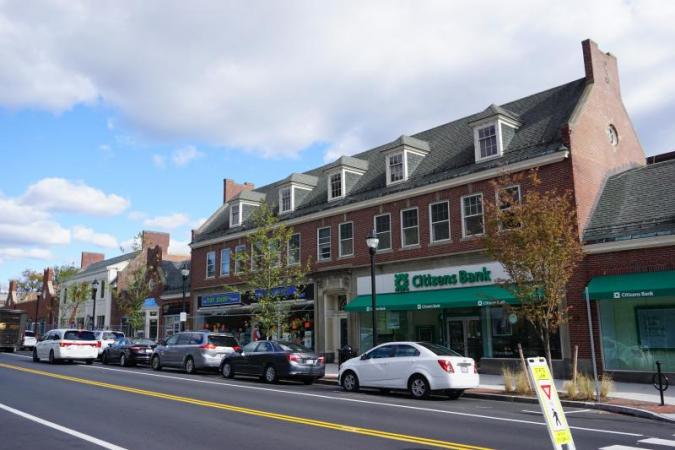
Belmont approved a new set of zoning rules for the heart of town this spring, and on November 1, 2026 the town begins accepting project applications under them. The Belmont Center Overlay District changes what can be built on the commercial blocks around Leonard Street, Claflin Street, and Concord Avenue. This post covers what the overlay allows, how it differs from the MBTA 3A overlay that already touches the same area, and what it means for your property if you own in or near the Center.
What Is the Belmont Center Overlay District?
The Belmont Center Overlay District is a second set of zoning options for Belmont's commercial core, approved at the March 2026 Special Town Meeting by a vote of 165 to 87.
An overlay district sits on top of the zoning you already have. Nothing about your underlying zoning changed the night it passed. A property owner inside the district can keep operating, renovating, and building under the old rules, or choose to develop under the overlay instead. The overlay only matters when an owner decides to use it.
The town's goals were practical. Belmont Center has carried vacant storefronts for years, the town has been hunting for ways to rebuild its commercial tax base, and there is steady demand for smaller homes from Belmont residents who want to downsize without leaving town. The overlay is Belmont's attempt to work on all three problems on the same few blocks.
What Does the Overlay Allow You to Build?
The overlay allows mixed use buildings in Belmont Center, with heights that step up by location, from three and a half stories on the northwest side of Leonard Street to five stories along the Claflin Street and Concord Avenue edge of the district.
The height limits are tiered to protect the feel of the main street. On the northwest side of Leonard Street, buildings start from a base of two and a half stories and can reach three and a half. The southeast side of Leonard, the block with CVS and the Toy Shop of Belmont, carries a base of three stories with a maximum of four. The portion of the district along Claflin Street and Concord Avenue, behind the storefront row, can go up to five stories. The pattern is deliberate: keep Leonard Street looking like Leonard Street and push the bigger buildings to the back of the block.
The residential program leans toward smaller homes, studios and one bedroom units above ground floor commercial space. That serves two groups Belmont already has in quantity: longtime owners who want to sell a big house and stay in town, and younger professionals who want to live on the commuter rail without paying Cambridge rents.
Some details still run through the Planning Board's rules and regulations, and parking was one of the most debated pieces of the whole project. If you are underwriting a project, confirm the current parking and design requirements with the town's planning staff before you count on a number.
How Is This Different From Belmont's MBTA 3A Overlay?
The Belmont Center Overlay District is a local choice aimed at reviving the commercial core, while Belmont's 3A overlay is the multifamily zoning the town adopted to comply with the state's MBTA Communities law.
The 3A overlay allows multifamily housing by right in districts around Belmont Center and Waverley Square, at densities set by the state law. The state required those districts. The Center overlay is Belmont's own move, built around mixed use redevelopment of commercial parcels rather than standalone apartment buildings. I keep a plain language breakdown of the state law on our MBTA 3A zoning hub, and a town specific guide in the Belmont MBTA 3A zoning breakdown, which covers the districts around Belmont Center and Waverley Square.
The two overlays overlap around the Center, and that overlap is the interesting part. Some parcels now sit under three sets of rules at once: the underlying zoning, the 3A overlay, and the new Center overlay. An owner can pick whichever path fits the site. Stacked options like that are rare in a town like Belmont, and they create exactly the situation where a parcel's zoning is worth more than its current use.
What It Means If You Own in or Near Belmont Center
If you own inside the overlay, you gained a development option without giving anything up, and options on land are worth real money.
For commercial owners, the practical change shows up at sale time. When a Center building trades from now on, the buyer is not just pricing the rent roll. They are pricing what the parcel could become under the overlay. If you are thinking about selling a Center property, get the overlay scenario valued first, because the highest bidder will have already done that math.
If you own a home near the Center, the effect is slower but still real. Fuller storefronts and new residents support the businesses that make the neighborhood worth living in. And every downsizer who moves from a single family house into a new unit above Leonard Street puts one more house on a market that never has enough of them.
On timing, applications open November 1, 2026, and rules and regulations details are landing between now and then. Expect the first serious proposals on the deeper parcels near Claflin Street and Concord Avenue, where the five story tier gives a project room to work.
What Buyers and Investors Should Watch
Investors should watch which parcels can actually use the overlay, because the height tiers and lot shapes make some sites far more valuable than others.
The strongest sites are the ones that reach the Claflin Street and Concord Avenue tier. A shallow storefront parcel capped at three and a half stories is a different investment than a deep lot that can carry five. Assemblage logic applies too: two ordinary adjacent parcels can become one strong site under the overlay envelope.
The demand side is already in place. Belmont Center has its own commuter rail stop on the Fitchburg Line, the 74 and 75 buses run to Harvard Square, and small units in walkable centers are the tightest product in the inner suburbs. Before a client offers on a Center parcel, I check three things: the gap between the current use and the overlay envelope, a realistic parking solution, and whether the ground floor space can actually lease on Leonard Street.
If you want the broader picture of the town before going deeper on the Center, start with our Belmont real estate market page and go from there.
Belmont Center Overlay District FAQ
When was the Belmont Center Overlay District approved?
Belmont's Special Town Meeting approved the Belmont Center Overlay District in March 2026 by a vote of 165 to 87.
When can projects apply under the overlay?
The town begins accepting project applications under the Belmont Center Overlay District on November 1, 2026.
Does the overlay replace Belmont's existing zoning?
No, the overlay adds a second set of options, and owners can keep using their underlying zoning or choose to build under the overlay instead.
How tall can new buildings be under the overlay?
Heights are tiered by location, with up to three and a half stories on the northwest side of Leonard Street, four stories on the southeast side, and five stories along the Claflin Street and Concord Avenue portion of the district.
Is the Belmont Center Overlay District the same as Belmont's MBTA 3A zoning?
No, they are separate overlays, because the 3A districts exist to satisfy the state's MBTA Communities law while the Center overlay is a local plan for the commercial core, and the two overlap around Belmont Center.
Do I need to do anything if I own property in the district?
No, nothing changes for you automatically, but you should understand what the overlay makes your parcel worth before you sell, refinance, or sign a long lease.
Zoning like this rewards owners who move early with information, not owners who wait for the first crane. If you own in or near Belmont Center and want a straight answer on what the overlay does for your specific parcel, or you want to buy into the Center before the first projects reset the pricing, reach out to PH Realty Group. We work these blocks and we will give you the real math.