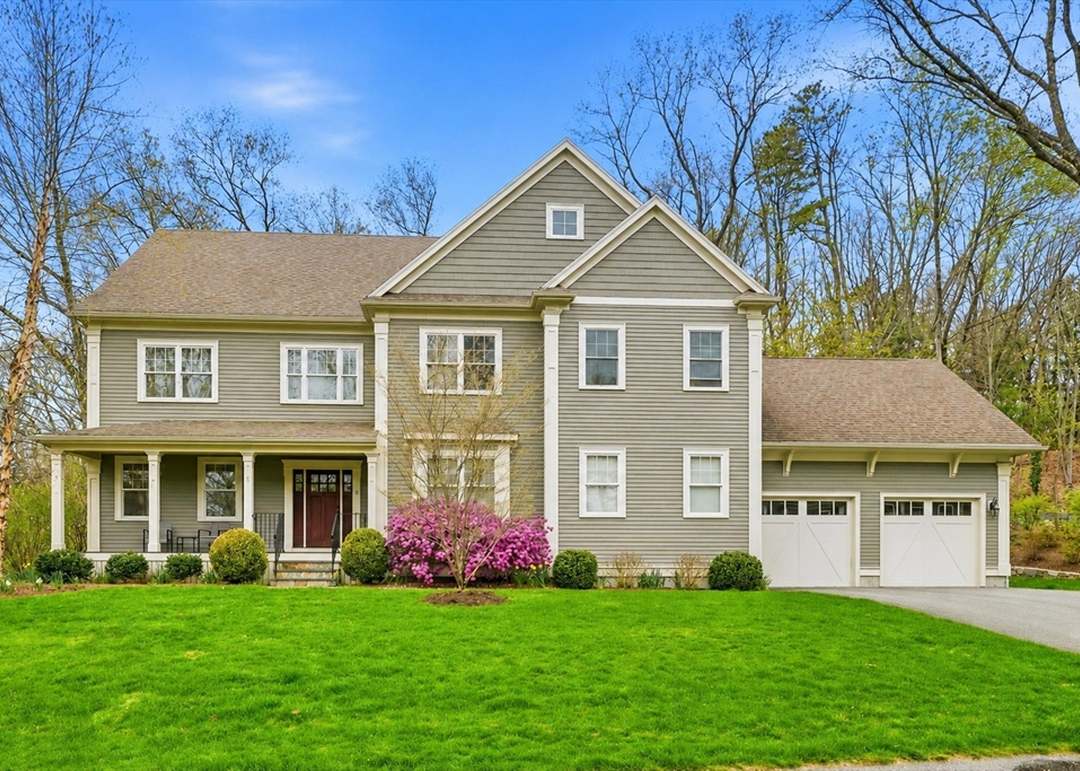
The short version for Lexington owners
Massachusetts now lets you build one accessory dwelling unit on most single family lots by right, and Lexington falls squarely under that rule. That means a second, self contained unit on your property without a special permit hearing, as long as it meets the size and building rules. If you have watched Lexington's zoning fights over the last two years and assumed adding a unit was off the table, the opposite is now true for a lot of properties in town.
Can you add an ADU in Lexington without a special permit?
Yes. Under the statewide law that took effect on February 2, 2025, a single protected use ADU is allowed by right in single family zoning districts, which covers most of Lexington's residential land. By right means you apply for a standard building permit and go through inspections, not a discretionary board vote where neighbors can talk it down. The state regulation that governs this is 760 CMR 71.00, and it bars towns from requiring a special permit for that first ADU.
Lexington actually has two paths on the books. The protected use ADU is the by right path with a building permit. The older accessory apartment path still exists and runs through a special permit, and that older path can carry conditions the by right path cannot, including an owner occupancy requirement. For most owners who just want a clean second unit, the by right protected use path is the one that matters.
How big can a Lexington ADU be, and where can it go?
Your ADU can be up to 900 square feet or half the gross floor area of your main house, whichever is smaller. So a 1,600 square foot house caps the ADU at 800 square feet, while a larger house still tops out at the 900 square foot ceiling. The unit can be attached to the house, carved out of existing space like a basement or an over garage area, or built as a detached structure in the yard, provided it still meets Lexington's dimensional and setback rules.
You get one ADU per lot by right. If you ever wanted a second one on the same lot, that would drop back into special permit territory. Parking is lighter than people expect: Lexington can require one additional space only if the property sits more than half a mile from a transit station, and even that is a single space. That matters near the bikeway and the town's bus corridors, where a lot of lots fall inside that half mile line.
What the owner occupancy and rental rules actually mean
The by right ADU cannot be tied to an owner occupancy requirement, and that is the single biggest practical change. Under the state rule, a town cannot force you to live in either the main house or the ADU, so you can build the unit and rent it out as a long term rental even if you move. That flexibility is exactly what the older special permit accessory apartment path did not give you, since that path can require an owner to occupy one of the units.
There is one limit worth knowing. Towns are allowed to restrict or prohibit short term rentals of these ADUs, so do not build one assuming you can run it as a nightly rental. Treat the ADU as a long term income unit, an in law suite, or space for an adult child or aging parent, and you are on solid ground with how the law is written.
Why this lands at a specific moment in Lexington
Lexington is the sharpest example in the region of a town wrestling with how much new housing to absorb. It was the first community in the state to pass multifamily zoning under the MBTA Communities law, then it pulled back hard after far more development came forward than officials expected, cutting its zoning capacity dramatically at Town Meeting in 2025. That pullback is about large multifamily projects on the overlay parcels, not about your single family lot. The ADU law runs on a separate track and was not part of that rollback.
The takeaway for an owner is that the town has tightened the door on big development while the state has opened a smaller door on your own property. If you want to understand how the overlay changes sit next to this, our MBTA 3A zoning hub lays out the framework across the region, and the Lexington 3A page tracks what happened here specifically. For where prices and demand sit block by block, start with our Lexington market page.
What I check before a Lexington owner adds an ADU
Before anyone spends money on plans, I walk the lot for the things that decide whether an ADU pencils out. The first is utilities. Most of Lexington is on town sewer, which keeps this simple, but a property on private septic runs into Title 5, and adding bedrooms can force a septic system upgrade that changes the whole budget. The second is siting: setbacks, existing structures, and grade often decide whether a detached unit fits in the yard or whether an attached or interior conversion is the smarter build.
Then I look at the money side the way a future buyer will. A well built ADU adds a real income stream and broadens your buyer pool at resale, since move up families, multigenerational buyers, and small investors all value a legal second unit. I also flag the closing mechanics you will eventually deal with, including the smoke and carbon monoxide certificate every Massachusetts seller needs at transfer, and the fact that your deed and any new structure sit in the Middlesex South Registry of Deeds. Getting the ADU permitted and documented correctly now is what protects that value later.
Frequently asked questions
Is an ADU allowed by right on my single family lot in Lexington?
In most cases yes, because the statewide law that took effect in February 2025 allows one protected use ADU by right in single family zoning districts, which covers the majority of Lexington's residential land, with a standard building permit rather than a special permit.
How large can my Lexington ADU be?
Your ADU can be up to 900 square feet or half of your main house's gross floor area, whichever number is smaller, so smaller homes cap the unit below 900 square feet.
Do I have to live on the property if I build an ADU?
No, because the by right protected use ADU cannot be subject to an owner occupancy requirement, which means you can rent the unit out as a long term rental even if you do not live in either dwelling.
Can I use a Lexington ADU as a short term rental?
You should not assume so, because the state rule lets municipalities restrict or prohibit short term rentals of ADUs, so these units are best planned as long term rentals or family housing.
Does adding an ADU raise my property value in Lexington?
A legal, well built ADU generally strengthens value because it adds an income stream and widens the buyer pool to include multigenerational households and small investors, as long as the unit is permitted and documented correctly.
Did Lexington's zoning rollback kill the ability to add an ADU?
No, because the 2025 rollback reduced capacity for large multifamily development on the town's overlay parcels, while the ADU law is a separate statewide rule that still applies to your single family lot.
Thinking about it for your own property?
If you own in Lexington and want to know whether an ADU makes sense on your specific lot, and what it would do to your value at resale, that is exactly the kind of read PH Realty Group does firsthand. Reach out and we will walk your property and your numbers before you commit to anything.