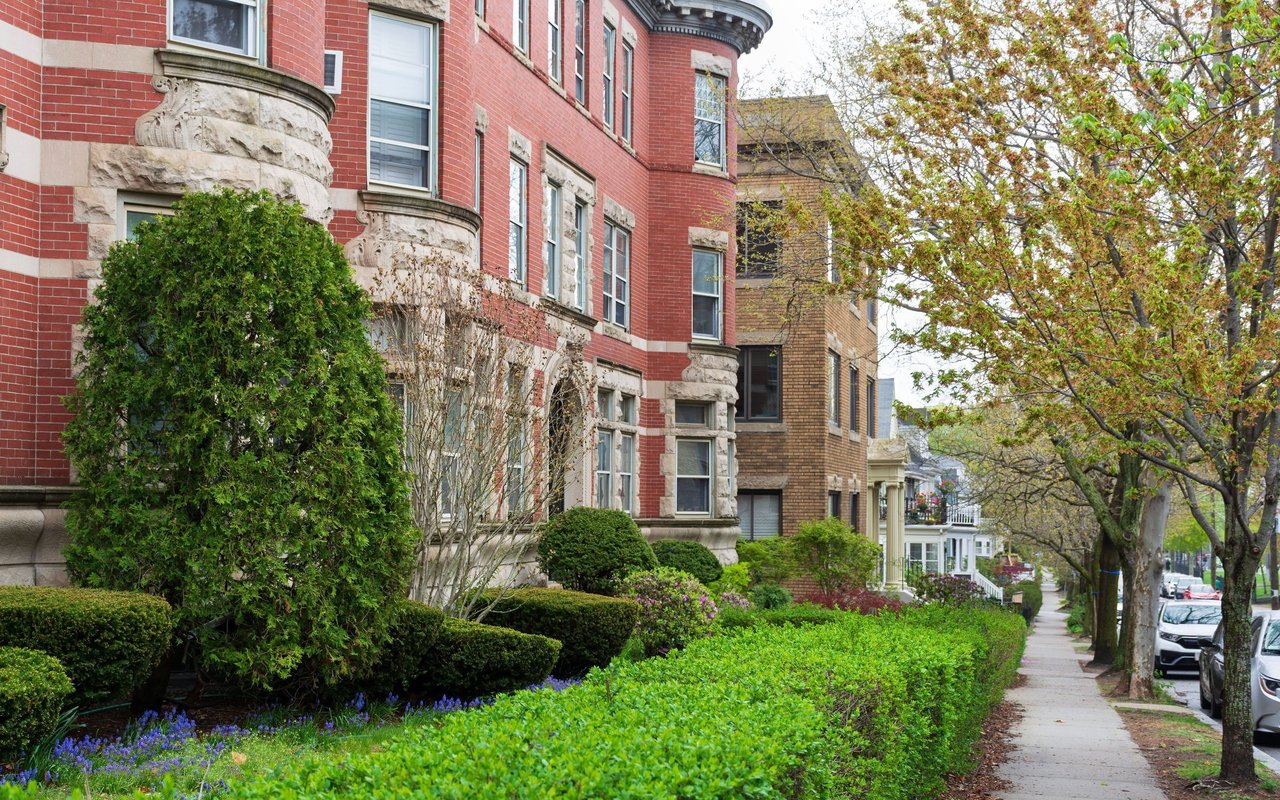
Brookline occupies a unique position in the Greater Boston landscape. It is an independent town, not part of the City of Boston, yet it is completely enclosed by it. That distinction matters in practical terms: Brookline has its own municipal government, its own school system, its own tax structure, and its own zoning code. For buyers evaluating the market, the question of Brookline versus a Boston neighborhood is not just about location — it is about which set of institutions and services you are buying into.
What has made Brookline one of the most durable real estate markets in Massachusetts is the combination of transit access, school quality, walkability, and proximity to major employment centers. Those fundamentals do not shift with market cycles, which is why Brookline tends to hold value well and attracts a consistent, high-quality buyer pool across economic conditions.
The Housing Stock
Brookline's housing stock is varied in a way that few markets in Greater Boston can match. On the upper end, large single-family homes on generous lots populate the streets of Fisher Hill, Pill Hill, and the Chestnut Hill side of town. These are substantial properties — brick colonials, Tudor revivals, and mid-century estates — and they attract buyers for whom Brookline represents a long-term home rather than a stepping stone.
The condo market is equally active. Beacon Street and the corridors around Coolidge Corner, Washington Square, and Brookline Village have dense condo inventory across all price points, from entry-level one-bedrooms to high-end penthouse units. Condo conversions of older multi-family buildings are common, and newer construction has added inventory in select locations along the Green Line corridors.
Multifamily properties — two- and three-family homes — exist throughout Brookline and represent some of the most sought-after investment assets in the area. When they come to market, they move. The combination of strong tenant demand, durable rental rates, and long-term appreciation makes Brookline multifamilies a compelling hold for investors willing to pay for quality.
Getting Around
Brookline is served by two branches of the MBTA Green Line. The C Branch runs along Beacon Street with stops at Coolidge Corner, Summit Avenue, Brandon Hall, Fairbanks, Washington Square, Tappan Street, and Dean Road before continuing into Newton. The D Branch runs through Brookline Hills, Beaconsfield, Reservoir, Chestnut Hill, and Newton Centre. Together, these two lines give Brookline residents direct rail access to Kenmore, Boylston, Park Street, and downtown Boston without a transfer.
The Longwood Medical Area — home to Beth Israel Deaconess Medical Center, Brigham and Women's Hospital, Dana-Farber, Boston Children's Hospital, and Harvard Medical School — sits directly on Brookline's northeastern edge. For the physicians, researchers, and healthcare professionals who make up a significant portion of Brookline's buyer pool, the proximity to work is a primary driver of demand.
Neighborhood Character
Brookline is anchored by several distinct commercial nodes, each with its own identity.
Coolidge Corner is the most active. The intersection of Harvard Street and Beacon Street is lined with independent restaurants, the landmark Coolidge Corner Theatre, bookstores, cafes, and everyday retail. It functions like a genuine urban neighborhood center and generates consistent foot traffic year-round.
Brookline Village, centered around Harvard Street near Route 9, has a quieter, more residential character with a solid restaurant scene and easy access to both Jamaica Plain and the Longwood corridor.
Washington Square, where Beacon Street meets Harvard Street farther west, is a neighborhood focal point with a more residential and local feel. Residents here are close to the C Line and within easy reach of both Coolidge Corner and the Chestnut Hill shopping corridor.
Beyond the squares, Brookline's residential streets are predominantly quiet and tree-lined, with the kind of block continuity that takes generations to develop. The Emerald Necklace parks, including the Leverett Pond and Olmsted Park system, run through portions of the town and provide green space that connects Brookline to Jamaica Plain and beyond.
Schools
Brookline Public Schools are among the strongest in Massachusetts and are a primary reason families purchase in the town. Brookline High School consistently ranks among the top public high schools in the state and draws strong outcomes across both academic achievement and college placement. The K through 8 system is similarly regarded. For buyers with children or planning for children, the school system is often the deciding factor that tips the decision toward Brookline over comparably priced alternatives.
Who Lives Here
Brookline attracts an unusually diverse mix of residents. The medical community along the Longwood corridor is heavily represented. Harvard, MIT, Boston University, and other academic institutions draw faculty and researchers. The Jewish community has deep historical roots in Brookline and remains a significant part of its identity. There are also substantial international communities, multigenerational families who have been in the town for decades, and a steady flow of buyers relocating to Greater Boston from other major cities who identify Brookline as the right fit for their lifestyle and school needs.
The median age of 35 reflects a population that is not exclusively young professionals or retirees but a genuine mix across life stages, which contributes to the stability and character of the town's neighborhoods.
For Buyers and Investors
Brookline is a conviction market. Buyers come here knowing what they want and they pay for it. What they get in return is access to one of the most fundamentally sound real estate markets in New England — a town with excellent schools, durable rental demand, consistent appreciation, and the kind of neighborhood quality that is extremely difficult to replicate. For investors, the combination of Longwood proximity, Green Line access, and a high-income, educated renter base makes Brookline multifamilies and condo assets among the most defensible long-term holds in Greater Boston.
Is Brookline part of Boston? No. Brookline is an independent town with its own municipal government, school system, and tax structure. It is completely surrounded by Boston geographically, which causes frequent confusion, but residents of Brookline access Brookline's public schools and town services, not Boston's.
What are the schools like in Brookline? Brookline Public Schools are among the highest-performing in Massachusetts. Brookline High School consistently ranks near the top of public high school lists statewide and draws strong academic outcomes. The K through 8 system is similarly well-regarded. School quality is one of the primary drivers of buyer demand in the town.
What MBTA lines serve Brookline? Brookline is served by two branches of the Green Line. The C Branch runs along Beacon Street through Coolidge Corner, Washington Square, and beyond. The D Branch runs through Brookline Hills, Beaconsfield, Reservoir, and Chestnut Hill. Both provide direct access to Kenmore, Park Street, and downtown Boston.
What neighborhoods are in Brookline? Brookline's main commercial and residential nodes include Coolidge Corner, Brookline Village, Washington Square, Chestnut Hill (Brookline side), Fisher Hill, and Pill Hill. Each has a distinct character, and price points vary considerably by location within the town.
How does Brookline compare to Newton? Both are independent municipalities adjacent to Boston with strong schools and high property values. Brookline is denser, more transit-connected, and more urban in character, particularly near the Green Line corridors. Newton offers more suburban density and larger lot sizes in many of its villages. Buyers choosing between the two are often weighing walkability and transit access against lot size and a more suburban pace.
Is Brookline a good place to invest in real estate? Yes, particularly for multifamily and condo assets in locations near Green Line stops or the Longwood Medical Area. Brookline has one of the most durable rental markets in Greater Boston, driven by healthcare workers, academics, and graduate students. Inventory is limited and demand is consistent, which supports strong occupancy and long-term appreciation.
PH Realty Group works with buyers, sellers, and investors throughout Brookline. If you are evaluating a purchase, looking to sell, or want a current read on the market, reach out directly.
62,822 people live in Brookline, where the median age is 35 and the average individual income is $94,739. Data provided by the U.S. Census Bureau.
Total Population
Median Age
Population Density Population Density This is the number of people per square mile in a neighborhood.
Average individual Income
There's plenty to do around Brookline, including shopping, dining, nightlife, parks, and more. Data provided by Walk Score and Yelp.
Explore popular things to do in the area, including Roadside Wrap House, Boston Wine School, and Stuart Books.
| Name | Category | Distance | Reviews |
Ratings by
Yelp
|
|---|---|---|---|---|
| Dining | 0.37 miles | 0 reviews | 0/5 stars | |
| Dining | 1.2 miles | 0 reviews | 0/5 stars | |
| Shopping | 0.95 miles | 0 reviews | 0/5 stars | |
| Shopping | 1.16 miles | 0 reviews | 0/5 stars | |
| Active | 0.41 miles | 0 reviews | 0/5 stars | |
| Active | 0.41 miles | 0 reviews | 0/5 stars | |
| Active | 0.48 miles | 18 reviews | 4.6/5 stars | |
| Active | 0.6 miles | 0 reviews | 0/5 stars | |
| Active | 0.6 miles | 0 reviews | 0/5 stars | |
| Active | 0.65 miles | 0 reviews | 0/5 stars | |
| Active | 0.86 miles | 1 review | 5/5 stars | |
| Active | 0.86 miles | 0 reviews | 0/5 stars | |
| Active | 0.94 miles | 0 reviews | 0/5 stars | |
| Active | 0.97 miles | 0 reviews | 0/5 stars | |
| Active | 0.98 miles | 0 reviews | 0/5 stars | |
| Active | 1.16 miles | 0 reviews | 0/5 stars | |
| Active | 1.26 miles | 0 reviews | 0/5 stars | |
| Active | 1.3 miles | 0 reviews | 0/5 stars | |
| Nightlife | 1.02 miles | 0 reviews | 0/5 stars | |
| Beauty | 0.37 miles | 0 reviews | 0/5 stars | |
| Beauty | 0.89 miles | 0 reviews | 0/5 stars | |
| Beauty | 1.12 miles | 0 reviews | 0/5 stars | |
| Beauty | 1.16 miles | 0 reviews | 0/5 stars | |
|
|
||||
|
|
||||
|
|
||||
|
|
||||
|
|
||||
|
|
Brookline has 27,210 households, with an average household size of 2.26. Data provided by the U.S. Census Bureau. Here’s what the people living in Brookline do for work — and how long it takes them to get there. Data provided by the U.S. Census Bureau. 62,822 people call Brookline home. The population density is 9,293 and the largest age group is Data provided by the U.S. Census Bureau.
Total Population
Population Density Population Density This is the number of people per square mile in a neighborhood.
Median Age
Men vs Women
Population by Age Group
0-9 Years
10-17 Years
18-24 Years
25-64 Years
65-74 Years
75+ Years
Education Level
Total Households
Average Household Size
Average individual Income
Households with Children
With Children:
Without Children:
Marital Status
Blue vs White Collar Workers
Blue Collar:
White Collar: